How to Play Rummy: Sets, Runs, Melding and Scoring Explained
Learn how to play Rummy step by step: the deal, drawing and discarding, sets and runs, laying off, going out and scoring, plus the main Rummy variants to try.
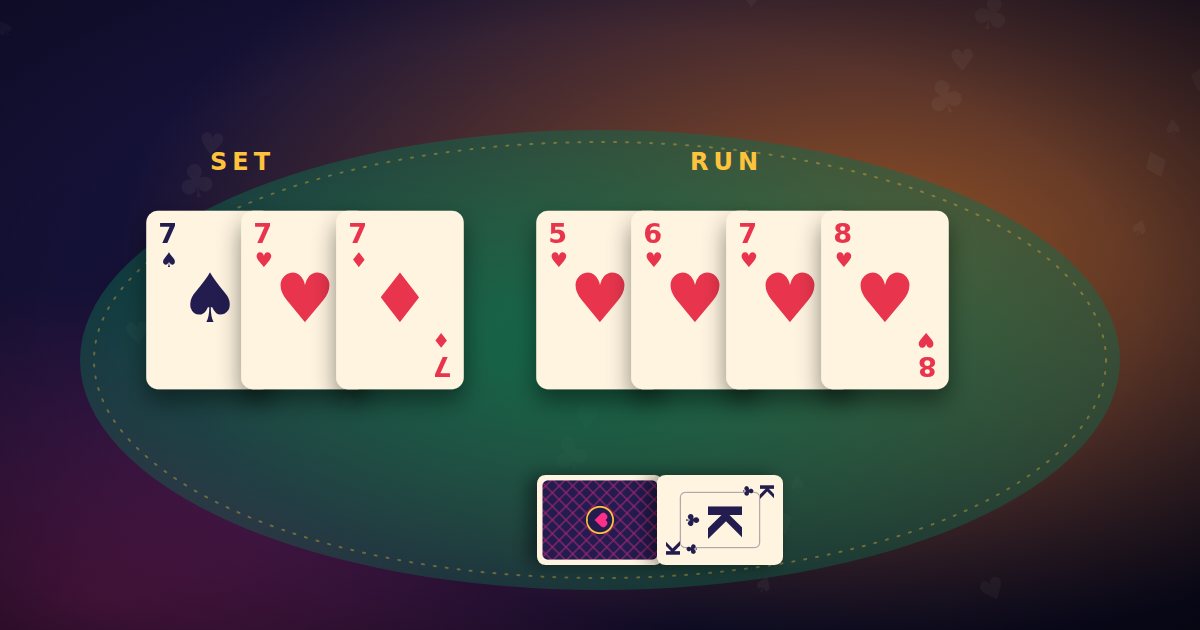
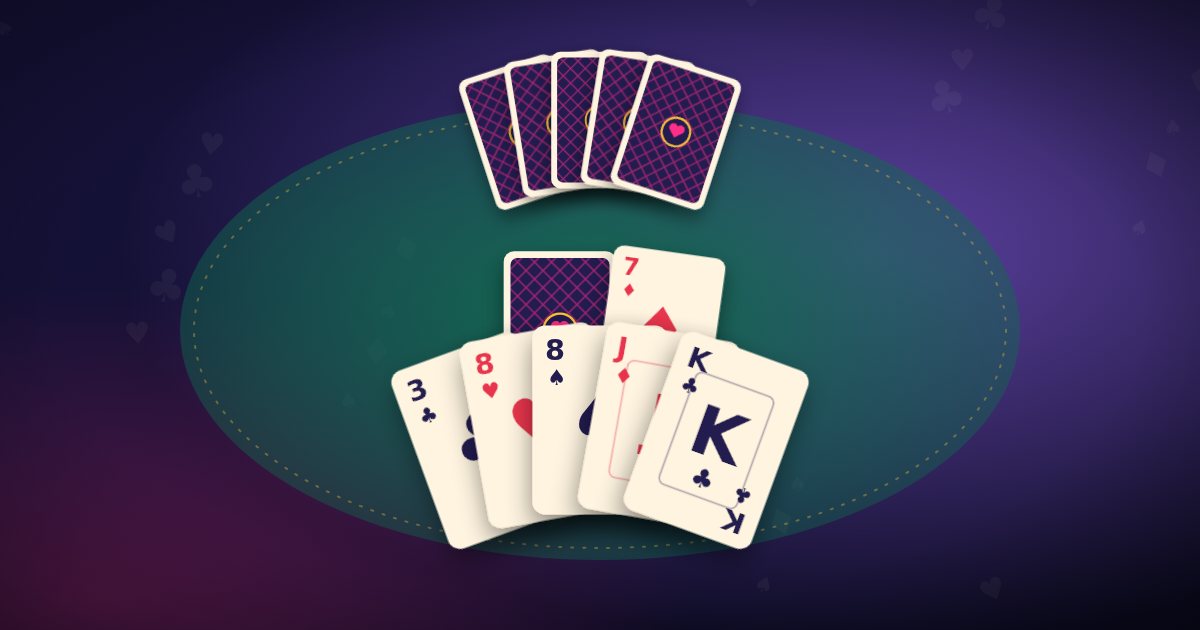
Here's how to play Rummy in one sentence: draw a card, try to arrange your hand into sets (three or four cards of the same rank) and runs (three or more cards in sequence in the same suit), lay them on the table, then discard one card. The first player to get rid of all their cards wins the hand.
That basic loop of draw, meld and discard sits at the heart of a whole family of games, from Gin Rummy to Indian 13-card Rummy. Learn standard Rummy below and you'll pick up any of them quickly.
Objective
Be the first to go out by getting rid of every card in your hand, either by melding them in sets and runs or by adding them to melds already on the table. When you go out, you score points for the cards your opponents are still holding.
Setup: what you need
- 2 to 6 players.
- A standard 52-card deck, no jokers (some groups add jokers as wild cards).
- Aces are low in standard Rummy: A-2-3 is a run, but Q-K-A is not. Some house rules let aces be high or low.
- After the deal, place the remaining cards face down as the stock, and turn the top card face up beside it to start the discard pile.
How many cards to deal
| Players | Cards each |
|---|---|
| 2 | 10 |
| 3–4 | 7 |
| 5–6 | 6 |
Melds: sets and runs
A meld is a valid group of cards you can lay on the table.
| Meld | What it is | Example |
|---|---|---|
| Set (or "book") | 3 or 4 cards of the same rank | 8♠ 8♥ 8♦ |
| Run (or "sequence") | 3 or more consecutive cards of the same suit | 4♣ 5♣ 6♣ 7♣ |
A run can't wrap around the corner: K-A-2 is not valid.
How a turn works
The player to the dealer's left goes first, and play continues clockwise. On your turn:
- Draw one card, either the top card of the stock or the top card of the discard pile.
- Meld (optional): lay down any sets or runs from your hand, face up in front of you.
- Lay off (optional): add cards from your hand to any meld already on the table, yours or an opponent's. If someone has 5♥ 6♥ 7♥ down, you could lay off the 4♥ or 8♥.
- Discard one card face up onto the discard pile to end your turn.
You can't pick up the top discard and throw the same card straight back on the same turn.
When the stock runs out
If the stock is empty before anyone goes out, the usual rule is to turn the discard pile over (without shuffling) to form a new stock. Some groups instead end the hand with no score, so agree this before you start.
Going out
You go out when you've played every card from your hand. In most rules your last card can be either melded or discarded. Some groups require a final discard, which means you can't go out by melding your whole hand.
If you go out by laying down your entire hand in one turn, having melded nothing before, that's called going "rummy". Many players double the score for it.
Scoring and winning
When someone goes out, every other player adds up the cards left in their hand, and the winner scores the total.
| Card | Points |
|---|---|
| Kings, queens, jacks | 10 each |
| 10 down to 2 | Face value |
| Aces | 1 each |
Cards an opponent has already melded don't count against them; only cards still in hand do. Play to an agreed target, such as 100 or 500 points, or for a fixed number of deals. Scoring targets vary a lot between families, so settle on one before the first deal.
Rummy variations
Standard Rummy is the starting point for many popular games:
- Gin Rummy: a two-player classic. You don't meld during play; instead you build your hand privately and "knock" when your unmatched cards total 10 or less. See our Gin Rummy rules.
- 13-card Indian Rummy: see our guide to 13 card rummy rules. In short, every player gets 13 cards, jokers are wild, and you must show a "pure sequence" to make a valid declaration.
- Rummy 500: you score points for the cards you meld, not just for going out, and can take several cards from the discard pile at once.
- Contract Rummy: played over several deals, each with a set "contract" (for example, two sets) you must make before you can meld.
Rummy strategy tips
- Watch the discard pile. If your opponent picks up the 9♦, they probably want nines or diamonds near nine, so don't feed them more.
- Discard high cards early. Kings and queens cost 10 points each if you're caught with them.
- Keep flexible cards. A 7♠ can join a set of sevens or a spade run; it's more useful than an isolated king.
- Don't meld too early. Laying down cards gives opponents places to lay off. In a close hand, holding your melds until you can go out in one turn can earn a rummy bonus.
- Lay off when it helps you go out. Adding to an opponent's meld still empties your hand.
- Count your deadwood. If an opponent looks close to going out, cut your losses by melding or discarding high cards.
Common mistakes
- Making a run that wraps from king to ace to two.
- Forgetting you can lay off on other players' melds.
- Holding high-value cards too long and paying for them at the end.
- Picking up a discard and throwing it straight back.
Learn more
New to card-game terms like "meld" and "deadwood"? Our card game terms glossary covers them. Rummy is also one of the best card games for 2 players. For a detailed reference on Rummy and its many relatives, see pagat.com's Rummy page.
Play card games offline
If you enjoy card games with a puzzle element, try Hazari, where you arrange 13 cards into strong groups each deal. For a bigger mix, Card Adda has 16 card games including Spades, Callbreak, 29, Hazari and Hearts, all playable offline against computer players.
FAQ
How many cards do you get in Rummy?
With 2 players, each gets 10 cards. With 3 or 4 players, each gets 7, and with 5 or 6 players, each gets 6.
What is the difference between a set and a run in Rummy?
A set is three or four cards of the same rank, such as three queens. A run is three or more cards in sequence in the same suit, such as 5-6-7 of clubs.
Is the ace high or low in Rummy?
In standard Rummy the ace is low, so A-2-3 is a valid run but Q-K-A is not. Many house rules allow aces at either end, but never wrapping round from king to two.
Do you have to discard to go out in Rummy?
It depends on the rules you're using. In most versions you can go out by melding or discarding your last card, but some groups require a final discard.
Card Adda
16 card games in one app: Spades, Callbreak, 29, Hazari and more. Free, offline, on Android.