Ludo Rules: The Complete Guide for 2, 3 and 4 Players
Official-style Ludo rules explained: the board, starting with a six, bonus rolls, capturing, safe squares, the home column, exact finishing and popular house rules.
Almost everyone has played Ludo, but ask four people for the rules and you'll get four answers. This guide gives you the standard rules first, then the most common house rules, so your table can agree before the first roll. (For winning tactics, see our Ludo tips and tricks.)
The board and pieces
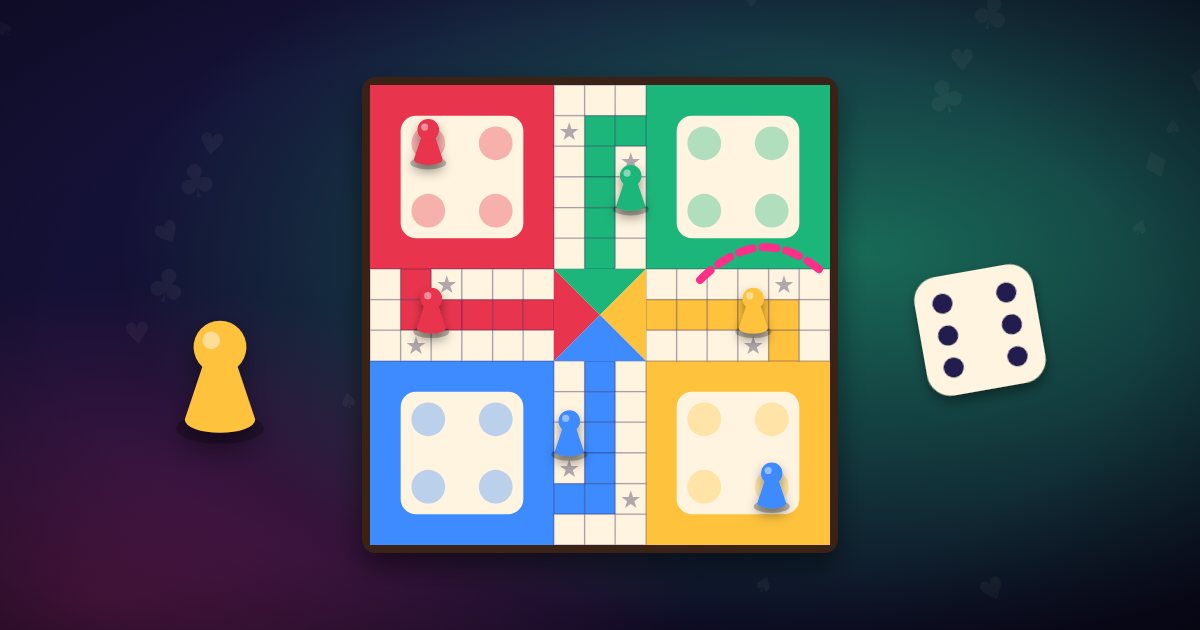
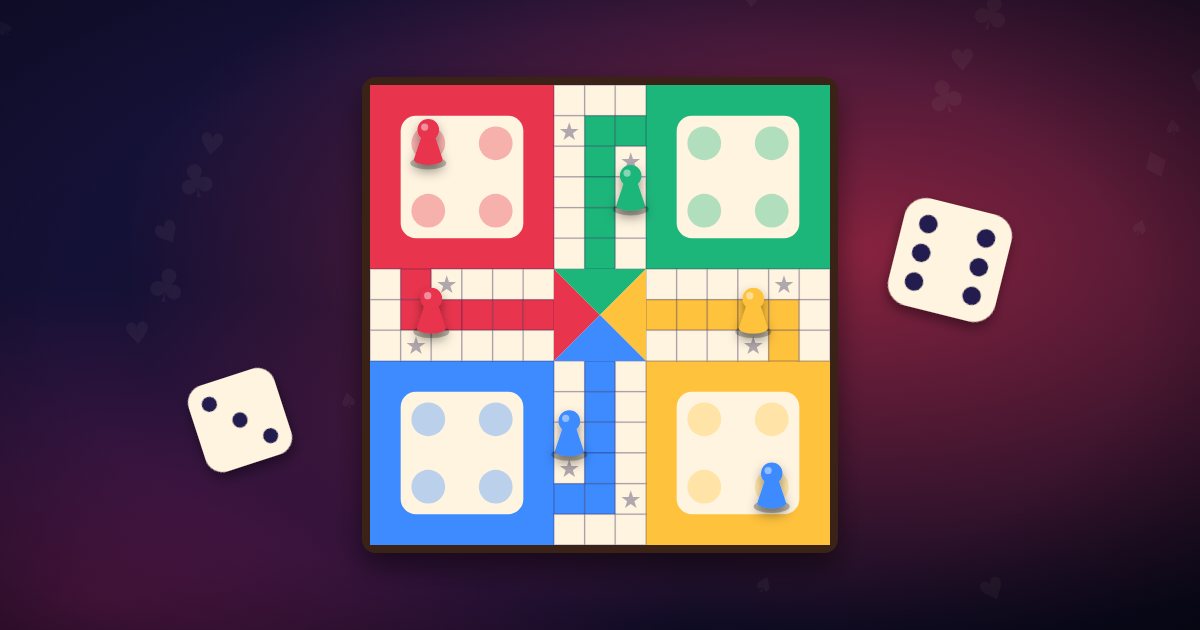
- A square board with a cross-shaped track of 52 squares around the middle.
- Four coloured yards (starting areas) in the corners, usually red, green, yellow and blue.
- A home column of coloured squares leading from the track to the home triangle in the centre.
- 4 tokens per player and one six-sided die.
Players
Ludo is played by 2, 3 or 4 players. With two players, many people sit in opposite corners and use two colours each, which makes the game longer and more tactical.
How to play: standard rules
1. Getting out of the yard
You need to roll a 6 to move a token from your yard onto your start square.
2. Moving
Move one token forward by the number rolled, clockwise around the track. If you can't make any legal move, your turn passes.
3. Rolling a six
A 6 gives you a bonus roll. Roll three sixes in a row and, in most rules, your turn ends and the third six doesn't count.
4. Capturing
Land exactly on a square occupied by an opponent's token and you capture it: it goes back to its yard and needs another 6 to come out.
5. Safe squares
Start squares and squares marked with a star are safe. Tokens there can't be captured, and in most versions several players can share them.
6. The home column
After a full lap, your token turns into your own home column. Opponents can't enter it, so it's completely safe.
7. Finishing
You need the exact number to move a token into the home triangle. If you roll too high, that token can't move.
8. Winning
The first player to bring all four tokens home wins. Others can keep playing for second and third place.
Popular house rules
| House rule | What changes |
|---|---|
| Start on 1 or 6 | A 1 also brings a token out of the yard |
| Bonus roll on capture | Capturing a token gives an extra roll |
| Must capture before home | A token can't enter the home column until you've captured at least once |
| Blockades | Two tokens of the same colour on one square block everyone |
| Bonus on home | Getting a token home gives an extra roll |
Ludo for 2 players
Two-player Ludo can be quick and luck-heavy. To make it more interesting:
- use two colours each (8 tokens per player), or
- use the "must capture before home" rule so players have to fight.
A game with a long history
Ludo is a simplified, dice-based version of the ancient Indian game Pachisi. Read the history of Ludo to see how it travelled from Mughal palaces to phones. The Wikipedia Ludo article lists many more regional variations.
Play Ludo offline
Board Adda: Ludo Carrom Chess lets you play Ludo against computer players with no internet needed, along with carrom, chess and ten more classics.
FAQ
Do you need a 6 to start in Ludo?
In standard rules, yes: a 6 moves a token from the yard to the start square. Some house rules also allow a 1.
What are the safe squares in Ludo?
Each player's start square and the squares marked with a star. Tokens on them cannot be captured.
How many players can play Ludo?
Two to four. With two players, each person often controls two colours.
Do you need an exact roll to finish in Ludo?
Yes. A token must land exactly in the home triangle; if the roll is too high, it can't move.
Board Adda: Ludo Carrom Chess
Ludo, carrom, chess and 10 more board games. Free, offline, on Android.