Checkmate vs Stalemate: What's the Difference in Chess?
Checkmate wins the game, but stalemate is a draw. Learn the difference, see classic stalemate traps with a queen, and how to avoid throwing away a winning position.
You've won the opponent's queen, chased their king into a corner, made your move, and the game ends in a draw. Welcome to stalemate, the most painful lesson in beginner chess. Here's the difference between checkmate and stalemate, and how to make sure your winning positions actually win.
The short answer
| Checkmate | Stalemate | |
|---|---|---|
| Is the king in check? | Yes | No |
| Any legal move available? | No | No |
| Result | Win for the side that gave mate | Draw |
Both positions leave the player to move with no legal moves. The only difference is whether their king is in check.
What is checkmate?
The king is attacked and there's no way to escape: it can't move to a safe square, the attack can't be blocked, and the attacking piece can't be captured. The game ends immediately and the attacker wins. (See our quick chess traps for famous fast checkmates.)
What is stalemate?
It's your opponent's turn, their king is not in check, but every possible move is illegal: every king move walks into check, and they have no other piece or pawn that can move. The game is a draw, no matter how much material you have (Wikipedia: Stalemate).
The classic beginner stalemate
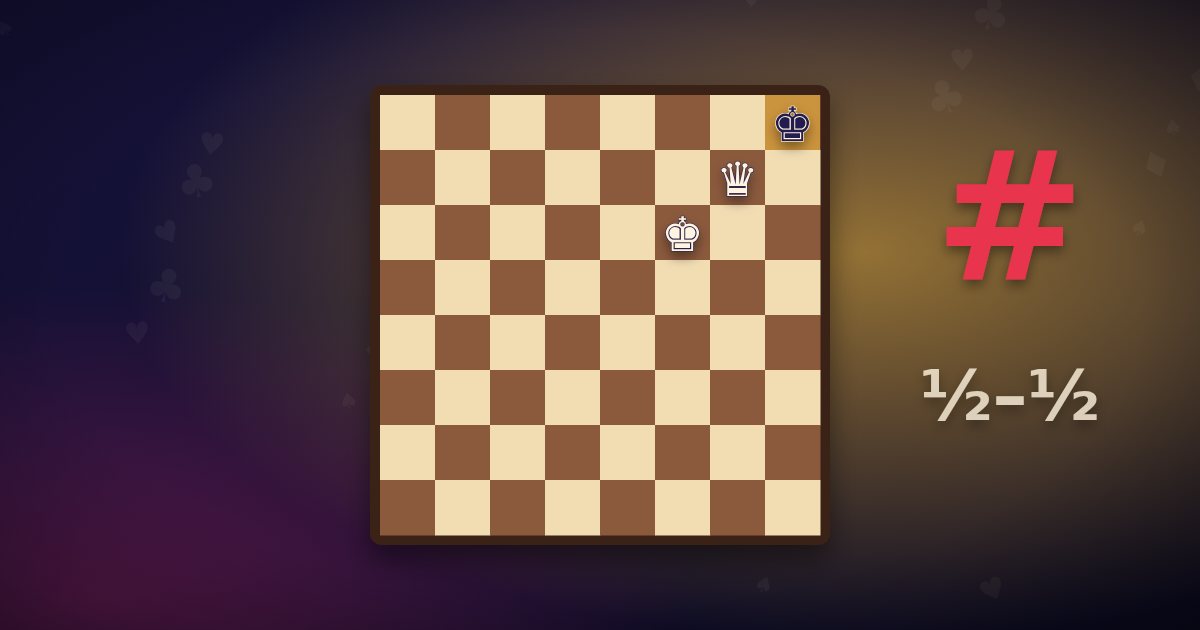
White has a king and queen; Black has only a king in the corner.
- Black king on h8. White queen moves to g6, and White's king is far away.
- It's Black's move. The king isn't in check, but g8, g7 and h7 are all covered by the queen.
- Black has no legal move. Stalemate: draw.
The queen controls so many squares that it's easy to box the king in without giving check.
5 ways to avoid stalemate
- Always check your opponent has a move. Before each move in the endgame, ask: after this, can their king move anywhere?
- Leave the king an escape square until you're ready to deliver mate.
- Bring your own king closer. King and queen together checkmate easily; a lone queen tends to stalemate.
- Watch pawns that can't move. Blocked pawns don't count as legal moves.
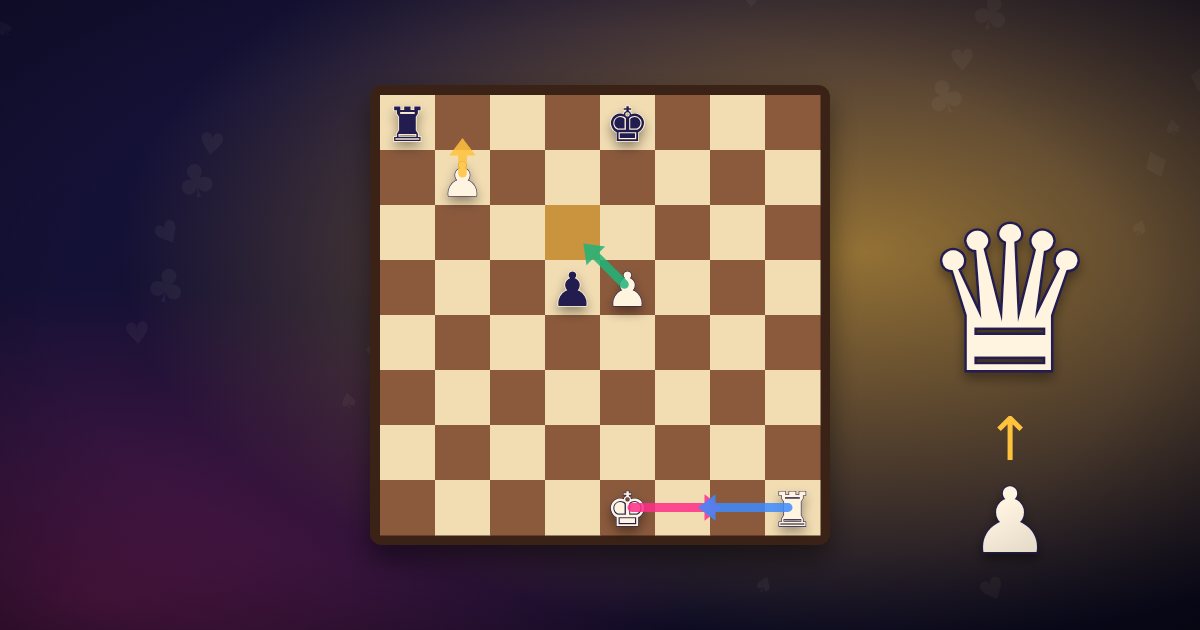
- Consider underpromotion. Sometimes promoting to a rook instead of a queen avoids stalemate. See castling, en passant and promotion.
Using stalemate when you're losing
If you're losing badly, stalemate is your escape route. Try to get your king into a corner with no pawn moves available. If your opponent is careless, you may save a draw from a lost game.
Other draws in chess
- Threefold repetition: the same position occurs three times.
- Fifty-move rule: 50 moves by each side with no capture and no pawn move.
- Insufficient material: for example, king against king, or king and bishop against king.
- Agreement: both players agree to a draw.
Practise endgames
The best way to stop stalemating is to practise king and queen against king until it's automatic. Board Adda: Ludo Carrom Chess lets you play the computer offline, so you can run through endgames as often as you like. New to chess? Start with how every piece moves.
FAQ
Is stalemate a win or a draw?
Stalemate is a draw.
What is the difference between checkmate and stalemate?
In checkmate the king is in check with no escape, which is a win. In stalemate the king is not in check but the player has no legal moves, which is a draw.
Can stalemate happen with lots of pieces on the board?
Rarely, because most pieces usually have a legal move. It's most common in endgames with a lone king.
How do I avoid stalemate with a queen?
Bring your king closer to help, and before every move make sure the enemy king still has at least one legal move until you deliver checkmate.
Board Adda: Ludo Carrom Chess
Ludo, carrom, chess and 10 more board games. Free, offline, on Android.