Spades Card Game Rules: Bidding, Nil, Bags and Scoring
Learn how to play Spades: partnerships, bidding, breaking spades, nil and blind nil, bags and the 10-bag penalty, and how to score your way to 500.
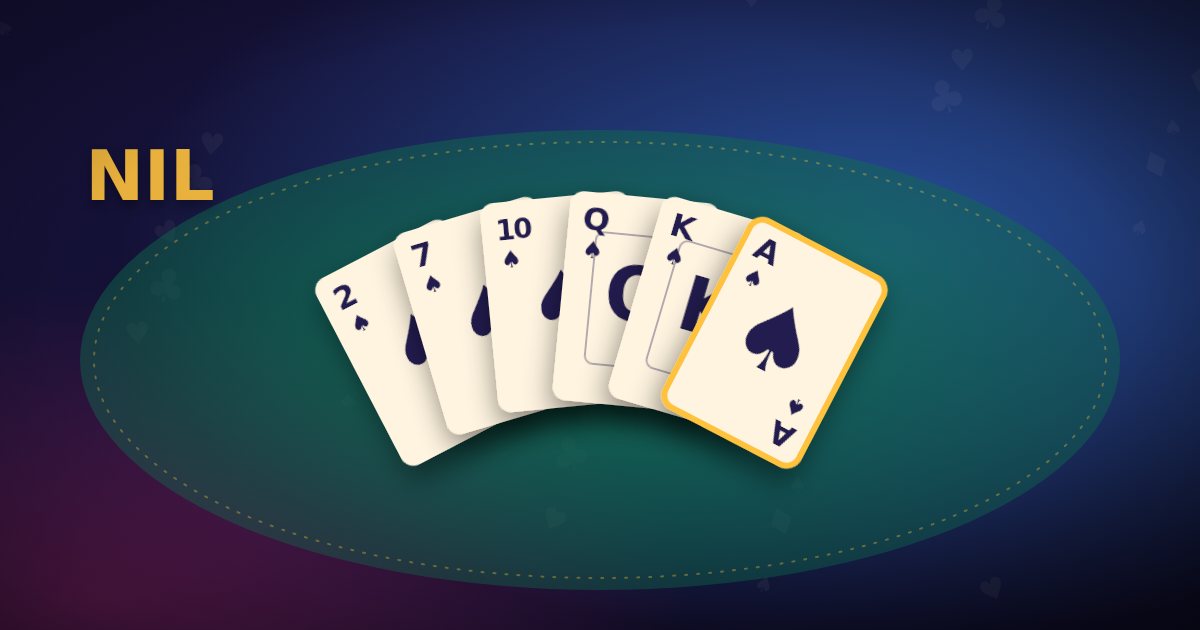
Spades is one of the world's favourite partnership card games. It's quick to learn, and the bidding makes every hand a small negotiation with your partner. If you already play Callbreak, you'll feel at home: spades are always trump. The big differences are that Spades is played in teams and has the famous nil bid. Here's everything you need.
Setup
- 4 players in 2 partnerships; partners sit opposite each other.
- A standard 52-card deck, aces high.
- Each player gets 13 cards.
- Spades are always trump.
- Play goes clockwise; the first team to 500 points wins.
Bidding
Each player bids how many tricks they expect to win, from 0 to 13. The two partners' bids are added together to form the team's contract. For example, if you bid 4 and your partner bids 3, your team must win at least 7 tricks.
Nil and blind nil
- Nil (0): you promise to win no tricks at all. Your partner's bid stands on its own.
- Blind nil: a nil bid made before looking at your cards. It's high risk and high reward, and usually only allowed when your team is well behind.
Playing the hand
- The player to the dealer's left leads the first trick.
- Everyone must follow suit if they can.
- If you can't follow suit, you may play any card, including a spade to trump.
- The highest spade wins the trick; if there's no spade, the highest card of the suit led wins.
- Breaking spades: you can't lead a spade until a spade has been played on an earlier trick (or you hold nothing but spades).
Scoring
| Result | Points |
|---|---|
| Team makes its contract | 10 × contract (e.g. bid 7 = 70) |
| Each trick over the contract (a "bag") | +1 |
| Every 10 bags collected | −100 |
| Team fails its contract | −10 × contract |
| Nil made / failed | +100 / −100 |
| Blind nil made / failed | +200 / −200 |
Most games end when a team reaches 500 points. In many rules a team dropping to −200 loses. These are the standard values; house rules vary, so agree before you start.
Why bags matter
Winning extra tricks feels good, but every 10 bags costs you 100 points. Experienced players often "set" the opponents (stop them making their contract) instead of chasing overtricks. Later in a game they may even deliberately give away tricks to avoid a bag penalty.
6 Spades strategy tips
- Count sure winners first: aces, the king of spades, and a void suit you can trump into.
- Bid as a team. If your partner bids high, bid a little conservatively; you don't want to overshoot.
- Protect a nil. When your partner bids nil, play high cards to win tricks they might otherwise be forced to take.
- Lead your short suit early to create a void, then trump in.
- Watch the bags. At 7 or 8 bags, stop taking unnecessary tricks.
- Count spades. Knowing how many trumps are left tells you when your small spades are safe.
Spades, Callbreak and Hearts
Spades belongs to the same trick-taking family as Callbreak (spades trump, but everyone plays alone) and Hearts (where you try to avoid tricks). Read our Hearts rules next. For a deeper reference on regional variants, see the Spades article on Wikipedia).
Play Spades offline
Card Adda includes Spades alongside Callbreak, 29, Hazari and Hearts: 16 card games in one app, all playable offline against computer partners and opponents.
FAQ
How many points do you need to win Spades?
Most games are played to 500 points. Some rules also end the game if a team falls to −200.
What is a nil bid in Spades?
Nil means you bid to win zero tricks. You score 100 points if you succeed and lose 100 if you take even one trick.
What are bags in Spades?
Bags are tricks won above your team's contract. Each is worth 1 point, but every 10 bags costs 100 points.
Can you lead spades at any time?
No. You can't lead spades until they are "broken" by someone trumping with a spade, unless you have only spades left.
Card Adda
16 card games in one app: Spades, Callbreak, 29, Hazari and more. Free, offline, on Android.